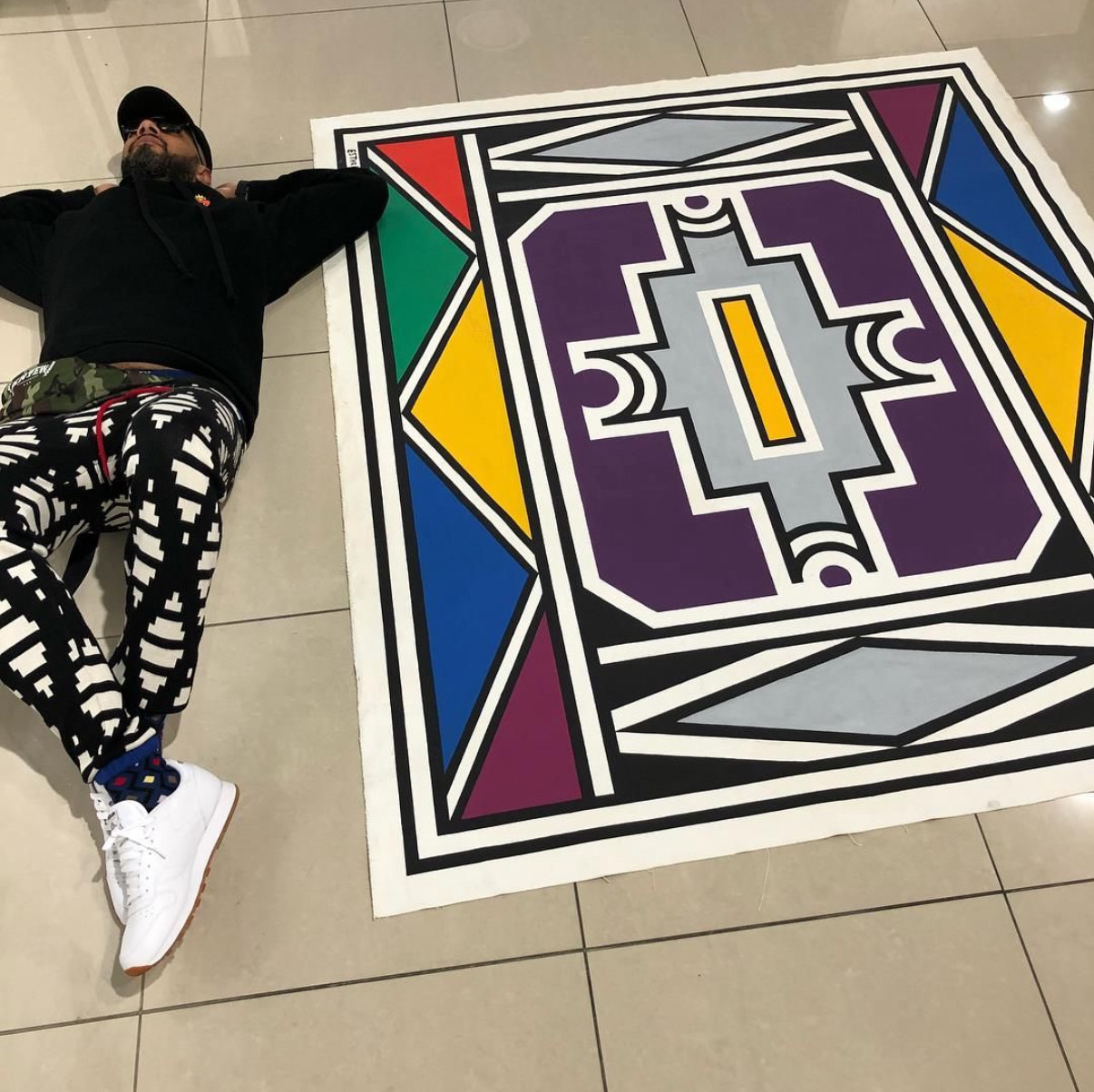
There’s a moment in many of Esther Mahlangu’s large-scale paintings when you realise the geometry isn’t just decoration — it’s language. The bold chevrons, diagonal lines and explosions of colour all speak to one thing: continuity. For over half a century, Mahlangu has insisted that her heritage — the Southern Ndebele aesthetic — remain visible and vital in a world constantly re-designing culture.
Born in 1935 on a farm outside Middelburg in Mpumalanga, Mahlangu’s story begins in a small house where the walls themselves were canvases. As a young girl she learned the craft of house-painting from her mother and grandmother, a tradition in which adolescent girls prepared to decorate their homes after marriage. This early education in pattern, colour and symbolism prepared her for what was to become an international career.
Her signature transformation came when she began translating the adobe exterior murals of Ndebele homesteads onto canvas, metal and even luxury cars. In 1991, she became the first non-Western woman to paint a vehicle for BMW — a 525i covered in her iconic motifs. That car now sits in the company’s art collection, a bold assertion that African design belongs in the same global conversation as Western modernism.
Tradition Meets the Global Stage
What makes Mahlangu’s artistry so compelling is the way she straddles two worlds: rooted tradition and cosmopolitan innovation. On one hand you have the communal Ndebele practice — women painting walls together, passing patterns through generations, turning homes into living galleries. On the other, you have Mahlangu’s presence in international exhibitions, collaborations with luxury brands and major retrospectives.
That duality feels urgent today. African culture is no longer waiting to be discovered; it’s defining the dialogue. Mahlangu’s career is proof. Whether painting a Rolls-Royce interior or mentoring young artists in her hometown, she demonstrates that heritage is not a museum exhibit — it’s a living discipline.
Lessons for a New Generation
For young African creatives, Mahlangu’s work offers three essential lessons.
First, patterning is identity. Her bold geometry shows how visual language can communicate who you are without needing translation. Whether you design sneakers, film sets or album covers, your visual code should reveal your roots.
Second, collaboration doesn’t mean compromise. Mahlangu’s global partnerships never diluted her Ndebele style. They amplified it. Her example reminds creators that working with major institutions is valuable only if your perspective remains intact.
Third, legacy is a verb. Through her community art school, Mahlangu ensures the next generation learns by doing. For every wall she’s painted, she’s empowered someone else to pick up a brush. In a creative economy obsessed with speed, her patience feels revolutionary.
A Living Thread
In an era where trends come and go in seconds, Mahlangu’s work stands like a woven tapestry — layered, deliberate and enduring. When you pass a mural in Johannesburg painted in Ndebele motifs or see a designer citing her influence, you’re witnessing a cultural archive in motion.
Her story forces a question central to African creativity today: how do we expand globally without losing our accent? For artists, filmmakers, and designers across the continent, Mahlangu provides an answer — stay fluent in your own visual language, no matter the medium.
In her hands, the margin became the masterpiece. What began as paint on a home wall in Mpumalanga became a vocabulary recognised around the world — a reminder that Africa’s oldest patterns still draw tomorrow’s lines.