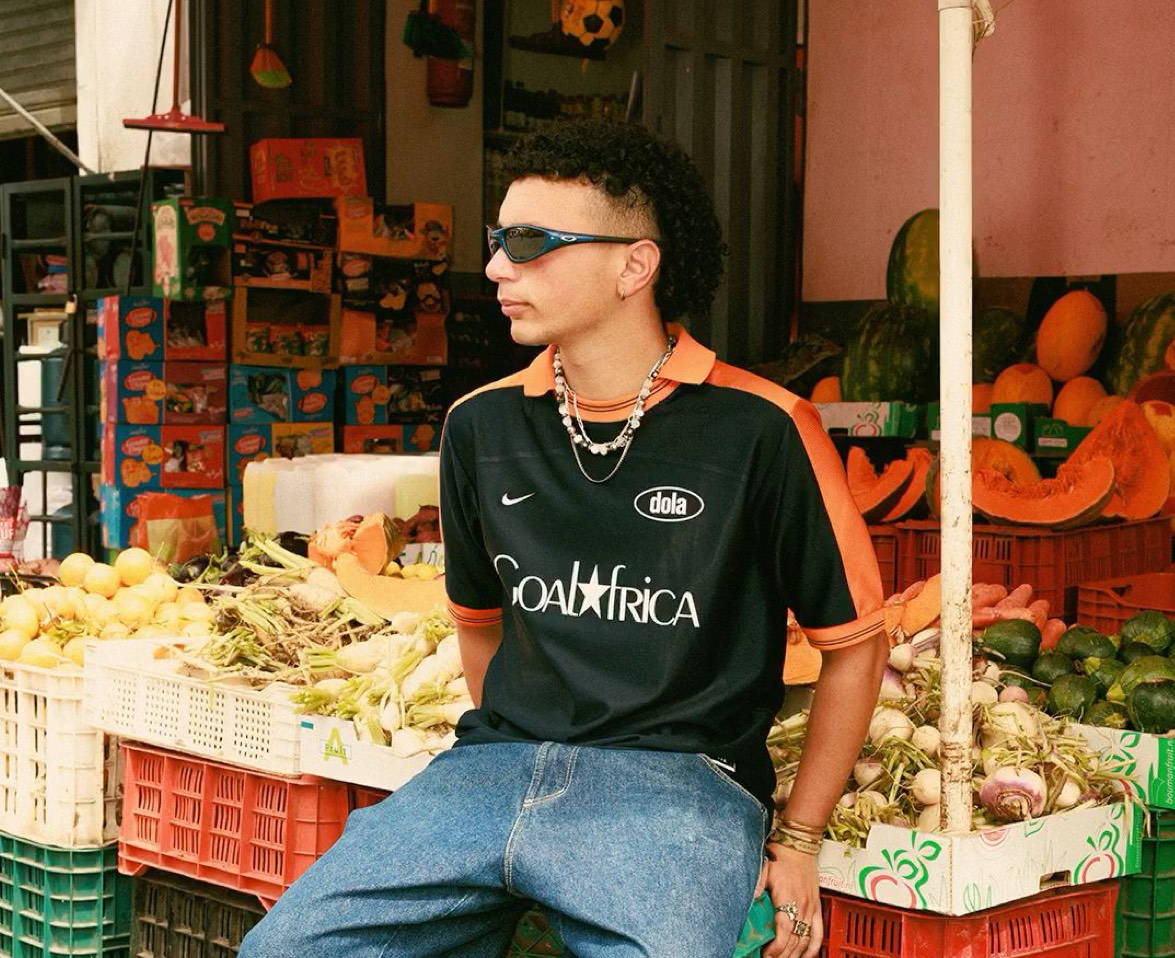
On any given weekend in Johannesburg, Accra or Lagos, the line between fan and fashion icon is almost impossible to spot. A young man might pull up to a Sunday kick-about in a vintage Arsenal jersey, gold chains and Crocs. A girl walks past in baggy PSG shorts and a Balenciaga cap. At the market later that afternoon, those same jerseys hang next to local streetwear — knock-offs mixed with originals — symbols of belonging and aspiration all at once.
Football, long Africa’s shared language, has evolved beyond the pitch. It’s now fashion currency, identity code and creative influence. From township thrift stores to designer studios, the game’s aesthetics have merged with style in ways even Europe’s fashion capitals couldn’t predict.
The New Uniform
For decades, football shirts were just fandom. Today, they’re statement pieces. Designers rework them with fresh cuts and local fabrics. Streetwear brands sell reimagined kits stitched with West African patterns. In Cape Town, stylists pair jerseys with tailored trousers and loafers — “boardroom meets bleacher”. The aesthetic sits somewhere between nostalgia and rebellion: sport as self-expression.
Thrift culture accelerated this shift. In markets like Owino in Kampala or Yaba in Lagos, imported vintage jerseys move fast. The 2006 Chelsea kit, the Ronaldo-era Brazil shirt, old Kaizer Chiefs home strips — they’re cultural gold. They carry memory, team loyalty, and global connection all in one. When you wear a rare piece, you’re not just showing support; you’re showing taste.
From Boot Room to Runway
Luxury brands caught on fast. In Europe, football-inspired fashion dominates catwalks — but Africa does it more naturally. The continent has always blurred sport, music and fashion. Riky Rick and AKA wore PSG shirts on stage. Wizkid performs in retro Nigeria kits. In South Africa, Amapiano DJs wear training bibs with cargo pants and designer sneakers. What began as imitation has become innovation: a global streetwear code filtered through African creativity.
Local designers are taking it further. In Ghana, Free The Youth released a capsule of reworked kits titled “Local Legends”. In Nigeria, WAFFLESNCREAM made football shorts part of everyday streetwear. Johannesburg’s own brands like Thesis and Dead. regularly drop sport-inspired cuts. These pieces sell not because of brand loyalty, but cultural relatability. Everyone grew up near a dusty field — and that memory, remixed with style, feels powerful.
The Business of Belonging
There’s money in emotion. Football merges aspiration with accessibility — anyone can wear it. That’s what makes it the perfect fashion base. Global brands eye this dynamic closely. Adidas and Puma sponsor African artists and local tournaments alike, blurring the line between performance and lifestyle. What used to be a billboard sport is now a content engine. Every match, every fan outfit, every remix of a kit is storytelling in motion.
But beyond commerce, it’s community. A football shirt, old or new, connects strangers instantly. It’s a passport in social spaces — at a party, a taxi rank, a flea market. It’s how many identify each other: same team, same tribe. In a continent of hundreds of languages, football remains a common tongue.
The Cultural Equation
When we talk about what drives culture in Africa, we often rush to music or politics. But the truth is simpler. Culture is what people wear, say, post and repeat. And right now, the game is everywhere — from Instagram edits of Bafana goals to the resale boom of classic Nigeria kits.
Football’s influence stretches from stadiums to sidewalks, from street to runway. It’s not just sport anymore; it’s style, memory and movement. The crowd, as always, knows best. They’re not just watching the game — they’re wearing it.