
Last month, Emtee stood on stage at Cape Town’s Kota Festival and got a crowd to chant “Fuck Nota.” Nota Baloyi wasn’t there. But, not long after clips of the incident started making rounds online, he responded. Naturally, his response was to claim victory. “Imagine. Niggas can scream my name everywhere. I’m not even there, dawg.” It may be the cleanest explanation of the Nota phenomenon yet.
For years, the music executive turned podcaster and professional provocateur has built a strange position for himself in South African culture. He can insult an artist on Tuesday, trend on Wednesday and spend Thursday explaining why everybody talking about him proves he was right in the first place. The criticism becomes content, the rebuttal becomes another clip and, by the time everybody has finished arguing about whether Nota was right, Nota has won the only competition that seems to matter online: attention.
Increasingly, there is also a platform waiting for him to do it. In February, MacG’s Podcast and Chill Network made him a co-host of Music Pulse, announcing his arrival with a joke that understood the product perfectly: “And don’t worry we have the lawyers.”
In September, a Music Pulse discussion reported by SA Hip Hop Mag produced another headline after Nota asked, “Who the fuck is Zoocci?” while dismissing producer Zoocci Coke Dope’s standing among the industry figures he considers important. A month earlier, after Nasty C won Best Hip Hop Album at the SAMAs for Free, the rapper went online and specifically addressed Nota’s criticism of the project, saying Nota had been “talking smack about the album” and that the award meant his detractors now had to “eat that”.
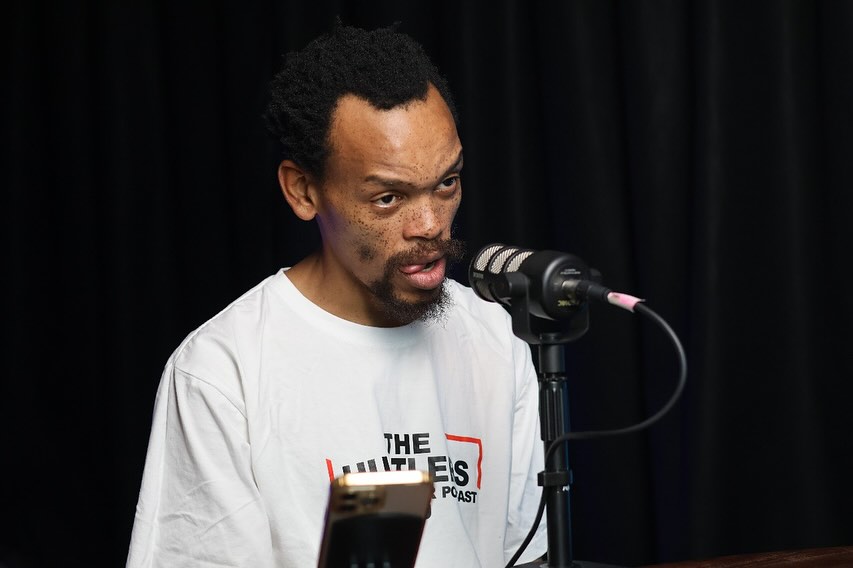
THE PROBLEM IS, NOTA ACTUALLY KNOWS THINGS
It would be much easier if Nota were simply some guy with Wi-Fi. He isn’t. Before the podcasts, viral clips and endless feuds, Nhlamulo “Nota” Baloyi was deeply embedded in South African music, particularly during one of the most important periods of Kwesta’s career.
Kwesta himself has repeatedly made that clear. In March, reflecting on the tenth anniversary of DaKAR II for Spotify, Kwesta explicitly credited Nota with collaborating on the album and pushing him towards the creative gamble of making it a double project. Spotify says the album had accumulated 51.8 million streams by then.
That matters because DaKAR II is not some footnote Nota can inflate because nobody remembers it. It is the album that gave us records like Ngud’ and Ngiyaz’fela Ngawe and helped define one of the great commercial runs in South African hip-hop. Nota’s fingerprints on that era are real; the more interesting question has always been where the legitimate contribution ends and the Nota mythology begins.
Kwesta has also explained the contradiction. He has previously said Nota came to see him as “his artist”, despite there being no contract or conversation establishing that relationship, and pushed back against the suggestion that Nota “made” him. The disagreement is therefore more interesting than truth versus fiction: Nota’s contribution was real. The argument is over where the contribution ends and the mythology begins.
There is often a fact somewhere inside the story. Nota was there, he knows the people, understands publishing, management and marketing, and knows how the machinery behind a successful record works.

THE NOTA VERSION OF HISTORY
Cassper Nyovest accidentally captured this contradiction perfectly in May. Responding to a resurfaced 2022 clip in which Nota claimed to own Billiato and described Cassper as essentially an ambassador for the brand, Cassper ridiculed the assertion but conceded something important: Nota “may be WELL informed about a lot of other things”.
It is a small line, but it explains why Nota cannot simply be dismissed. Even one of the artists most irritated by him acknowledges that beneath the noise is somebody who knows the industry. That sliver of credibility changes how every subsequent claim travels.
In May, Nota also posted an old photograph of himself alongside K.O, PRO, Slikour and other figures from South African hip-hop and declared himself the GOAT. When somebody pointed out that he had since fallen out with many of them, his response was typically modest: “I surpassed them.”
THE BUSINESS OF BEING NOTA
Music Pulse has effectively institutionalised what Nota was already doing online. His opinions no longer disappear down the timeline; they become clips, reaction posts, entertainment stories and then new subjects for the following week’s discussion. Even people trying to demonstrate that he is irrelevant end up doing the work required to keep him relevant.
There is, however, a point at which the content stops being harmless theatre. A High Court judgment awarded DJ Shimza R200,000 in damages over defamatory statements made by Nota. In August, Nota publicly apologised to Black Coffee after a High Court dispute, acknowledging that allegations he had made about the DJ had no valid basis and were false and defamatory.
The South African Human Rights Commission also accepted an unconditional apology from Nota in 2025 after finding a prima facie hate-speech contravention arising from racially offensive remarks about white people. As part of the settlement, he undertook not to engage in hate speech or racism and agreed to diversity and sensitivity training and community service.
And still, the machine keeps moving. Last week, Shimza celebrated being ranked No. 75 on DJ Mag’s Top 100 DJs list. Nota responded by taking a swipe at DJ Maphorisa, mocking his TikTok activity and making a provocative reference to “Zanzou sodomy”, before signing off with “well done Ashley!” Even somebody else’s achievement can become an opportunity for Nota to provoke, attract attention and start another argument.
THE ART OF RAGE BAITING
Rage bait does not require belief, it requires reaction. The correction, quote tweet, podcast response, group-chat screenshot and angry comment all accomplish the same thing: distribution.
Research into online behaviour suggests that social rewards can encourage people to produce more outrage, while separate research into the “illusory truth effect” has shown that repetition can make claims feel increasingly credible. In an environment where the accusation travels instantly and the fact-check arrives later, sheer volume can blur the distinction between what we know, what we heard and what we have simply seen often enough to remember.
But Nota possesses something most rage merchants do not: genuine credibility underneath the performance. He has been in the rooms, contributed to important records and understands the music business well enough that dismissing everything he says would be foolish. That makes the exaggerations more potent because every outrageous claim arrives carrying the possibility that, buried somewhere beneath it, Nota knows something you don’t.
Maybe that is his greatest trick. Nota does not need you to believe everything he says. He only needs you to keep wondering which part is true.